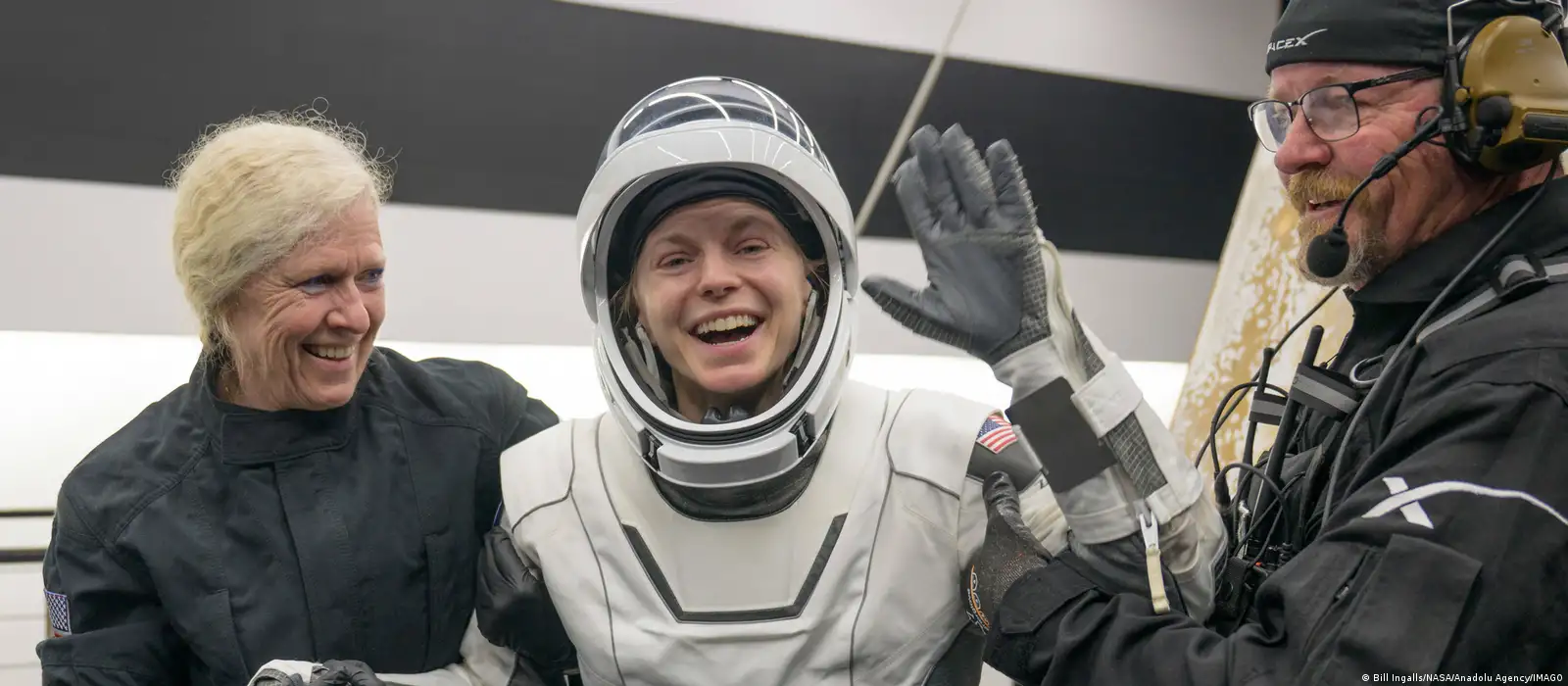
In a historic turn for human spaceflight, NASA’s Crew-11 mission recently concluded with an unprecedented medical evacuation from the International Space Station (ISS). This swift return, facilitated by a SpaceX Dragon capsule, brought astronauts back to Earth ahead of schedule due to an undisclosed medical concern. The event underscored the dynamic challenges of living in orbit and the crucial readiness of modern space agencies and their commercial partners to ensure astronaut safety.
An Unprecedented Call Home
The mission of NASA’s Crew-11, commanded by Zena Cardman, took a dramatic turn when mission control initiated an emergency descent protocol. While the International Space Station (ISS) usually operates on a months-long rotation, the sudden prioritization of a medical evacuation marked a rare departure from standard orbital procedures. This specific return was deemed unprecedented due to the speed at which NASA and SpaceX synchronized the splashdown logistics, bypassing several science objectives to ensure crew safety. Before the departure, the atmosphere aboard the station was one of focused urgency; the crew had been managing a high-density workload including complex biological experiments and station maintenance tasks.
The decision for an early return was prompted by a medical concern involving one of the crew members, whose condition remained stable throughout the transition but required comprehensive diagnostic tools available only on Earth. As the SpaceX Dragon capsule undocked, residents of the Florida coast were alerted to the potential for a sonic boom today as the craft re-entered the atmosphere. Unlike previous mission extensions, this evacuation highlighted the Space X fleet’s agility in providing a reliable “lifeboat” capability. This event underscores the inherent risks of spaceflight and the critical reliance on commercial partners to execute rapid-response recovery missions when health variables shift unexpectedly in the microgravity environment.
Crew-11 and the Faces of the Mission
The Crew-11 mission was spearheaded by a diverse quartet of elite explorers, each bringing a specialized technical repertoire to the International Space Station. At the helm stood Commander Zena Cardman, a distinguished geologist whose expertise in microbial ecology and extreme environments became the cornerstone of the mission’s scientific objectives. Cardman’s leadership during the SpaceX Dragon evacuation was nothing short of historic; her poise under pressure redefined the role of a first-time commander facing an unprecedented medical contingency. Serving as the mission’s pilot was veteran Mike Fincke, whose vast flight experience provided a stabilizing force during the rapid transition from orbital research to emergency descent.
The international depth of the crew was solidified by Kimiya Yui of JAXA and Oleg Platonov representing Roscosmos. Yui’s contributions were pivotal in executing complex life science experiments and robotics, while Platonov facilitated critical cross-segment operations between the American and Russian modules. Before the NASA astronauts’ space station evacuation, the team had successfully conducted advanced microgravity studies aimed at long-duration survival and deep-space habitation. The synergy between NASA and Space X was put to the ultimate test during this return. As the capsule pierced the atmosphere, triggering a sonic boom today over the recovery zone, the success of the operation served as a testament to the crew’s rigorous training and Cardman’s decisive management during the mission’s most critical hour.
SpaceX’s Critical Role in Safe Return
The swift orchestration of the Crew-11 evacuation highlights the seamless synergy between NASA and its primary commercial partner, SpaceX. When the mission’s early termination was signaled, the Dragon capsule transitioned from an orbiting laboratory extension into a high-stakes lifeboat. The evacuation sequence began with a precise undocking procedure, where the Dragon autonomously detached from the International Space Station’s Harmony module. This separation initiated a series of departure burns to safely distance the craft before the critical deorbit burn, which slowed the vessel enough to be captured by Earth’s gravity.
During the atmospheric re-entry, the Dragon’s PICA-X heat shield endured extreme thermal stress as the capsule plummeted at nearly 17,500 miles per hour. Coastal residents may have heard the unmistakable sonic boom today, a characteristic acoustic signature of the vehicle’s rapid deceleration as it sliced through the thickening atmosphere. Following the deployment of the drogue and main parachutes, the capsule achieved a soft splashdown in the designated recovery zone. This successful recovery of the Crew-11 members, including Commander Zena Cardman, emphasizes the vital role of the Commercial Crew Program. SpaceX’s ability to execute an unscheduled return demonstrates that modern spaceflight is no longer tethered to static launch windows. Instead, commercial vehicles offer the operational flexibility and reliability required to safeguard human life during complex orbital emergencies.
The Sound of Re-entry A Sonic Boom
As the Crew-11 mission’s SpaceX Dragon capsule plummeted through the thickening layers of Earth’s atmosphere, it announced its arrival with the thunderous signature of modern spaceflight: the sonic boom. This acoustic phenomenon is the result of an object traveling faster than the speed of sound, which, in the context of orbital re-entry, involves initial velocities exceeding Mach 25. As the SpaceX vessel encounters atmospheric resistance, it pushes air molecules aside with such force that they compress into a conical shock wave. For residents across various California coastal regions, this manifested as a jarring double-thud, serving as a visceral reminder of the NASA mission’s swift and urgent conclusion.
The physics of this event are distinct from the localized “booms” typically produced by supersonic military aircraft or standard test flights. A re-entering spacecraft carrying astronauts such as Zena Cardman creates a sprawling “boom carpet” that follows the trajectory of the vehicle for hundreds of miles across the ground. While reports of a sonic boom today are frequently linked to the vertical recovery of Falcon 9 boosters at landing zones, the Crew-11 signature was uniquely evocative of an emergency space station evacuation. The intensity and timing of the sound reported by Californians highlighted the specific ballistic descent profile required for this medical return. By contrasting this with routine operational noise, we understand how the atmospheric acoustics served as a public broadcast of the high-stakes space x recovery, signaling the final stage of the crew’s journey back to terrestrial soil.
The Future of Human Spaceflight After Crew-11
The early splashdown of the Crew-11 mission marks a watershed moment in the commercialization of low Earth orbit. By leveraging the rapid-response capabilities of the SpaceX Dragon capsule, NASA demonstrated a level of operational flexibility that was virtually impossible during the Shuttle era. This event forces a reevaluation of mission planning, shifting the focus from rigid schedules to a more fluid, modular approach. The departure of Zena Cardman and her crewmates ahead of schedule has left a temporary void in the International Space Station (ISS) research manifest, necessitating an immediate acceleration of the Crew-12 launch. This “domino effect” highlights the fragility of orbital staffing and the critical need for SpaceX to maintain a high cadence of vehicle readiness to bridge these unexpected gaps.
Key implications for future mission planning include:
- The implementation of more rigorous, real-time medical screening protocols for long-duration stays.
- Increasing the frequency of standby Space X recovery assets to ensure constant evacuation readiness.
- Developing modular science payloads that can be operated remotely when crew numbers are reduced.
The sonic boom today heard during reentry serves as a visceral reminder of the physical realities of these emergency contingencies. For NASA, the priority now shifts toward refining safety-first frameworks that balance astronaut health with scientific continuity. This incident underscores that while the ISS is an international laboratory, its resilience depends on the agility of private entities. The collaboration remains strong, yet the pressure to standardize emergency deorbit procedures across various commercial platforms has never been more pressing for the future of deep-space exploration.
Conclusions
The Crew-11 medical evacuation marks a significant moment in space exploration, showcasing the unwavering commitment to astronaut well-being and the critical partnership between NASA and SpaceX. This event not only tested emergency protocols but also demonstrated the advanced capabilities required for rapid space returns. As we look to the future, incidents like this reinforce the ongoing need for robust medical support, adaptable mission planning, and reliable transportation for humanity’s presence in orbit.