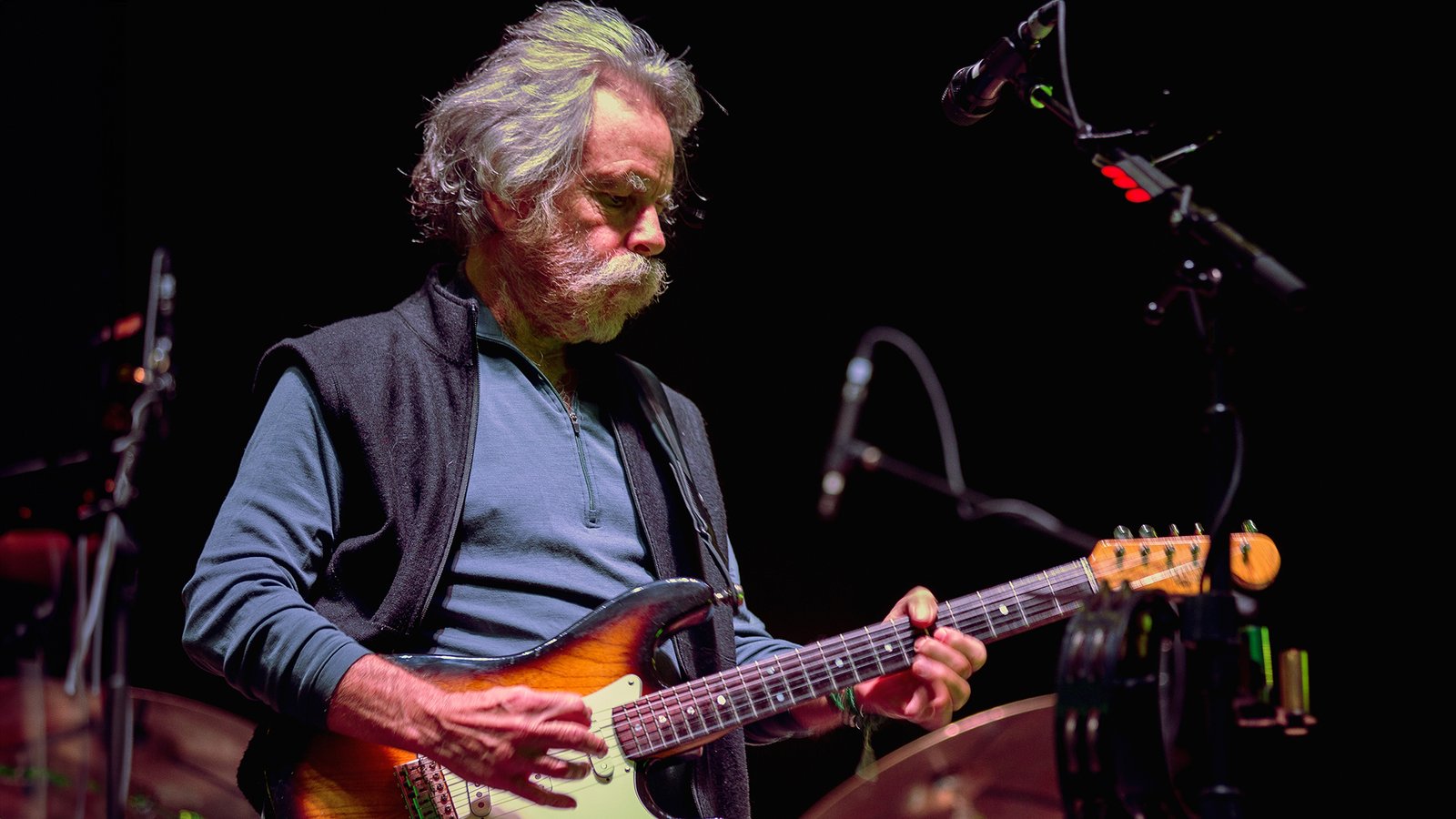
Bob Weir, the legendary founding member of the Grateful Dead, continues to be a driving force in the music world. From his early days as a rhythm guitar innovator to his recent triumphs with Dead and Company, Weir has redefined musical longevity. This article explores his incredible career, addresses common health rumors, and looks into the life of the man fans call Bobby.
The Early Years and the Grateful Dead Era
Bob Weir’s journey into the heart of rock and roll began early, dropping out of high school to immerse himself in the vibrant San Francisco music scene of the 1960s. His initial encounters with Jerry Garcia, Phil Lesh, and others quickly blossomed into the formation of the Warlocks, soon to be known as the Grateful Dead. From the outset, Weir carved out a truly distinctive niche with his rhythm guitar work, a style often described as “percussive” and “avant-garde.” Unlike traditional rhythm players who might stick to simple chord progressions, Weir employed complex voicings, inversions, and an almost melodic counterpoint that intricately wove through Garcia’s exploratory lead guitar. This synergistic interplay became a hallmark of the Grateful Dead’s sound, allowing for spontaneous improvisation and dynamic sonic landscapes that few bands could replicate. Weir was also a significant songwriting force, penning or co-writing many of the band’s enduring classics. Tracks like “Sugar Magnolia” and “Cassidy” not only showcased his lyrical prowess but also his ability to craft songs that resonated deeply with the Dead’s evolving fan base. His influence extended beyond the band’s internal dynamics, occasionally interacting with luminaries such as Bob Dylan and Paul McCartney, further solidifying the Grateful Dead’s place in the pantheon of influential musicians. Throughout the 1960s and 70s, Weir’s innovative approach was instrumental in shaping the band’s sonic identity, steering them through psychedelic explorations and into their more refined, jam-oriented sound.
The Resilience of Bobby Weir and Health Realities
The persistent and often alarming online queries surrounding Bob Weir health and the widespread circulation of Bob Weir death rumors paint a misleading picture of a legend who remains vibrantly active. Despite the concerning volume of searches for “Bob Weir cause of death” or “did Bob Weir die,” the truth stands in stark contrast: at 76 years young, Bobby is not only alive but continues to be a formidable presence on stage, confounding those who seek to prematurely write his epitaph. His current status as a highly active performer, spearheading tours with Dead & Company, is a testament to his remarkable resilience and commitment. Debunking these pervasive misconceptions, it is crucial to recognize his legendary fitness regimen, which includes rigorous pre-show workouts that enable him to command the stage for three-hour performances with an energy that belies his age. Having outlived several beloved bandmates, Weir embodies the enduring spirit of the Grateful Dead, carrying forward their musical legacy with unwavering passion and stamina, proving that reports of his demise are, thankfully, greatly exaggerated.
Dead and Company and the Modern Musical Renaissance
Dead and Company have carved a remarkable niche, extending the Grateful Dead’s legacy to a new generation while delighting long-time followers. Their recent residency at the Sphere in Las Vegas exemplifies their enduring appeal and innovative spirit, offering an unparalleled immersive experience. At the heart of this success lies the undeniable synergy between Bob Weir and John Mayer. Mayer’s masterful guitar work and profound respect for the source material allow him to intertwine seamlessly with Weir’s unique rhythmic style, breathing fresh life into beloved classics for new audiences. This collaboration revitalizes the band’s extensive catalog and showcases a new depth in their improvisational journeys. The ensemble, featuring the percussive wizardry of Mickey Hart and, until recently, the foundational drumming of Bill Kreutzmann, consistently delivers a dynamic and evolving sound. Beyond the music, Dead and Company’s performances are a visual feast. From lighting iconic landmarks to the cutting-edge, immersive technology at the Sphere, their live shows are a holistic sensory spectacle, pushing concert boundaries and reaffirming their pioneering status in modern music.
Personal Life Wealth and the Man Behind the Icon
Beyond the stage lights and roaring crowds, Bob Weir’s enduring personal life has been a cornerstone of his remarkable career longevity. His steadfast marriage to Natascha Münter, a union that has spanned decades, provides a crucial anchor amidst the demanding schedule of a touring musician. Together, they have nurtured a family, raising their two daughters, Monet and Chloe Weir, instilling in them a deep appreciation for both stability and the artistic spirit. This unwavering family support system is not merely a personal comfort; it is a vital component that has enabled Weir to continue pushing musical boundaries and maintaining an arduous performance schedule well into his seventies. Financially, Weir’s shrewd business acumen, combined with relentless touring, has solidified an impressive legacy. His estimated net worth, hovering around 60 million dollars, reflects not just the success of the Grateful Dead and Dead and Company, but also his independent ventures and astute management of his artistic endeavors. This substantial financial standing is a testament to a career built on innovation, resilience, and the unwavering backing of his loved ones, ensuring his position as a true icon in the music world.
The Eternal Legacy of the Rhythm King
From his earliest days with the Grateful Dead, Bob Weir carved out a unique space in American rock, not merely as a rhythm guitarist but as an architect of a sound that defied categorization. His innovative, almost lead-rhythm approach laid much of the groundwork for what would become the expansive, improvisational world of the jam band genre. Initially seen as the band’s younger, wilder sibling, bobby gradually matured into the undisputed elder statesman, a role he embraces with a profound sense of responsibility. His commitment goes beyond performing; it’s about nurturing the legacy and ensuring that the music never stops evolving. Through projects like Dead & Company, Weir acts as a vital bridge, connecting the original psychedelic explorations of the 60s to the vibrant, dynamic landscape of contemporary live music. He embodies the enduring spirit of artistic exploration, proving that the sonic journey is far from over, continually drawing new generations into the communal embrace of improvisational rock. His influence is a testament to his unwavering dedication to the craft and the cultural significance of the Grateful Dead.
Conclusions
Bob Weir stands as a monumental figure in music history, proving that the Grateful Dead’s legacy is as vibrant today as it was in 1965. By successfully navigating the transition to Dead and Company and embracing modern technology at the Sphere, Weir has ensured his songs remain timeless. Despite recurring rumors, his health and dedication to his craft remain unwavering.