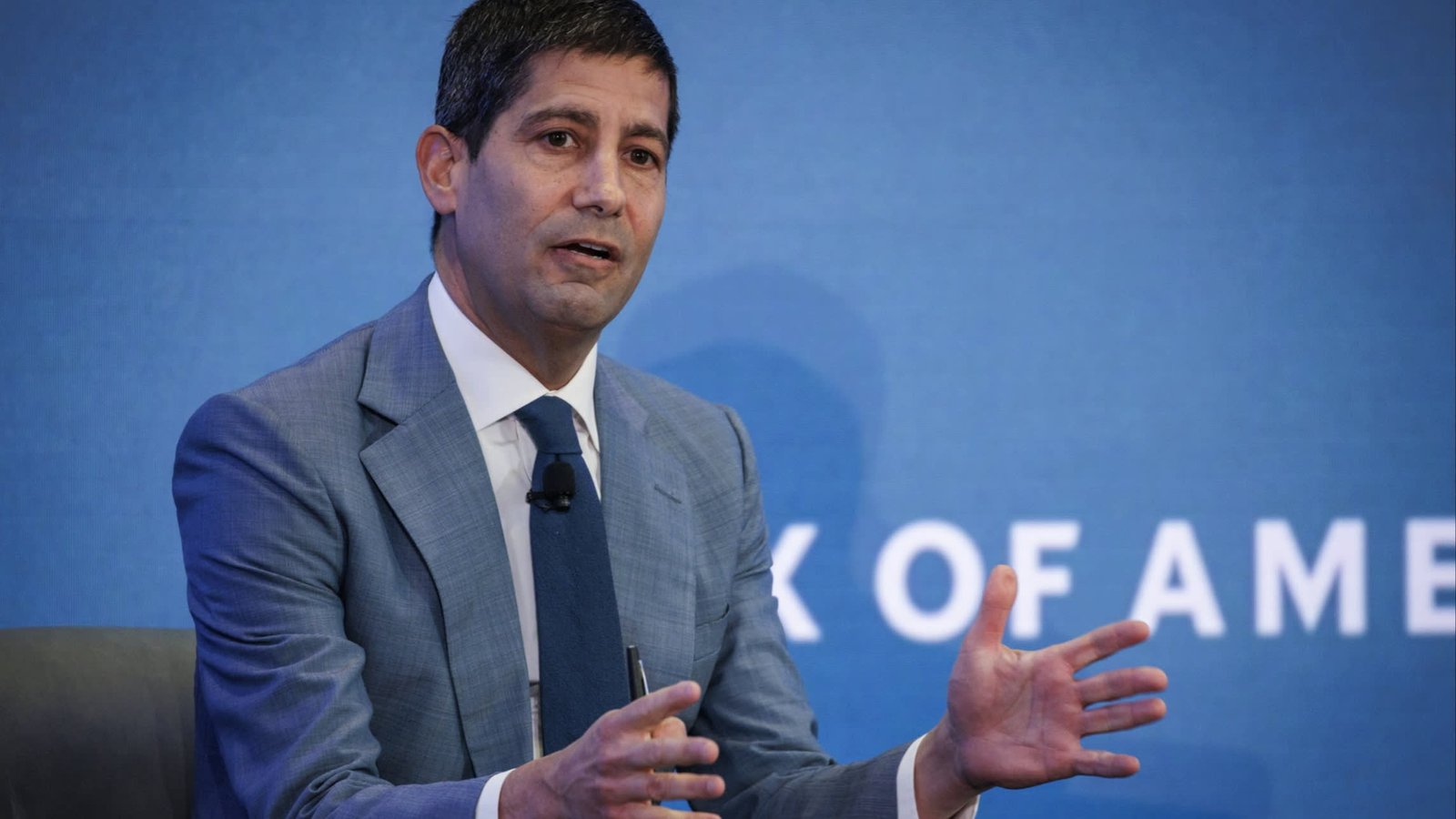
Donald Trump has signaled Kevin Warsh as a top pick for Federal Reserve Chair, marking a potential shift toward a more growth-oriented and politically aligned era.
A New Direction for the Federal Reserve
The potential transition from Jerome Powell’s tenure to a Kevin Warsh chairmanship represents a fundamental pivot in American monetary governance. While Powell, with his legal and private equity roots at the Carlyle Group, has operated as a steady, consensus-driven diplomat, Donald Trump views Warsh as “central casting”—the embodiment of a Fed chief who commands market respect while mirroring the administration’s aesthetic and ideological vigor. Unlike Powell’s cautious, data-dependent approach, Warsh’s background as a Morgan Stanley dealmaker and his 2006–2011 stint as a Fed Governor during the Great Recession provided him with a unique “market-first” perspective. He understands the plumbing of Wall Street and the nuances of monetary policy better than many of his predecessors, which Trump believes is essential for a growth-oriented economy that challenges the status quo.
This transition signals more than just a change in personnel; it heralds a “regime change” that could redefine the Federal Reserve’s traditional independence from the executive branch. Warsh has frequently critiqued the Fed’s current “groupthink” and its insular academic nature, suggesting a profound need for more transparency and alignment with broader economic goals. Critics and economists worry this translates to increased political pressure from the White House, potentially transforming the Fed into an extension of the executive branch’s fiscal policy. By prioritizing interest rate cuts and a more aggressive stance on global trade dynamics, a Warsh-led Fed might align more closely with Trump’s strong dollar aspirations and sweeping deregulation efforts. This would be a stark departure from the Jerome Powell era, where the “Fed chair” often acted as a buffer against political whims.
The primary reasons why this shift is significant for institutional credibility include:
- The potential erosion of the monetary policy firewall between the White House and the central bank, leading to fears of politicized rate decisions.
- A shift from cautious inflation-targeting to a more growth-focused mandate that favors rapid expansion over price stability.
- Increased market volatility as investors recalibrate their expectations for a “regime change” in liquidity management and guidance.
- The departure from the legalistic, procedural caution of the Powell era toward a proactive, market-centric leadership style that risks long-term inflation.
Navigating the Tension Between Growth and Inflation
Kevin Warsh’s potential ascent as the kevin warsh trump fed nominee represents a sophisticated recalibration of Republican monetary thought. As the likely kevin warsh trump pick, he has shifted from his historical “inflation hawk” identity toward a strategic dovish pivot, shaping his kevin warsh economic policy around the idea that kevin warsh monetary policy must adapt to structural changes. Central to his vision as the kevin warsh next fed chairman is the provocative belief that interest rate policy is, fundamentally, housing policy. He contends that kevin warsh interest rate cuts are essential to unlock a frozen real estate market, viewing high rates as the primary driver of a “housing recession” that stifles labor mobility and economic fluidity.
In the debate of kevin warsh vs jerome powell, specifically as kevin warsh replaces jerome powell, he sharply critiques “mandate creep.” He intends to dismantle initiatives related to DEI and climate change, refocusing on price stability and core growth. For those asking who is kevin warsh trump fed chair, he is a strategist seeking a return to a “rules-based” framework. However, a tension exists in the trump economic policy kevin warsh architecture: the desire for lower rates alongside a trump kevin warsh strong dollar policy. Warsh argues that deregulation and fiscal restraint will bolster the kevin warsh impact on markets, maintaining dollar strength through productivity. While the trump kevin warsh stock market reaction shows optimism, the kevin warsh impact on interest rates must balance expansion with his kevin warsh inflation views.
The kevin warsh federal reserve would likely prioritize:
- Housing Affordability Indices: Monitoring the gap between mortgage rates and inventory levels.
- Real GDP Growth: Prioritizing supply-side expansion over demand management.
- The Dollar Index (DXY): Ensuring trump kevin warsh markets stability amid rate shifts.
- M2 Money Supply: Gauging long-term inflationary pressures via monetarist roots.
- Yield Curve Spreads: To ensure the kevin warsh fed chair era avoids policy-induced inversions.
Wall Street Expectations and the Strong Dollar Strategy
Global financial markets are currently recalibrating for a seismic shift as Kevin Warsh emerges as the top Trump pick to lead the Federal Reserve. Unlike the cautious, data-dependent approach of Jerome Powell, a Kevin Warsh Federal Reserve is expected to prioritize a more aggressive, growth-oriented posture. The immediate stock market reaction to a Kevin Warsh trump fed nominee announcement would likely manifest as a broad-based rally, particularly within the financial and industrial sectors. This optimism is rooted in his pro-deregulation stance, which is heavily influenced by the Department of Government Efficiency (DOGE). By streamlining the regulatory burden, Warsh could unlock significant liquidity, further fueling the AI trade and capital-intensive tech ventures.
However, the Kevin Warsh impact on markets carries inherent contradictions. While Donald Trump frequently advocates for interest rate cuts, Warsh’s historical inflation views suggest a lurking hawkish instinct. If he perceives a threat to price stability, he may pivot toward tightening, creating significant stock market volatility for speculative assets that have grown accustomed to easy money. Furthermore, the strong dollar policy remains a focal point; Warsh must navigate the delicate balance of maintaining U.S. currency dominance while managing a ballooning U.S. debt pile through nuanced monetary intervention. International investors are watching closely, weighing the potential for a sustained “Warsh rally” against the existential fear of a politicized central bank.
Sector-Specific Market Predictions:
- Financials: Substantial gains expected as the kevin warsh economic policy focuses on dismantling post-crisis capital constraints.
- Technology: Mixed outlook; while deregulation helps, a strong dollar could hurt overseas earnings for mega-cap firms.
- Real Estate: Sensitivity to Warsh’s monetary policy could lead to volatility if long-term yields spike on inflation fears.
- Manufacturing: Potential growth if trump economic policy kevin warsh successfully aligns with domestic industrial resurgence.
Conclusions
Kevin Warsh’s potential leadership at the Federal Reserve represents a pivotal moment for the U.S. economy. By potentially aligning the central bank more closely with the White House’s growth-oriented agenda while leveraging his credibility as an inflation hawk, Warsh faces the challenge of modernizing monetary policy. Investors must brace for a more dynamic and politically integrated approach to global stability.