The 2026 political landscape is currently dominated by a fascinating blend of rugged cultural symbols and unprecedented constitutional friction. As slogans like “one of ours, all of yours” attempt to unify the electorate, high-profile figures like Kristi Noem leverage powerful visual branding to navigate a sea of controversy. This article explores the intersection of Western identity, federal enforcement, and speculative impeachment.
The Populist Rhetoric of the Slogan One of Ours All of Yours
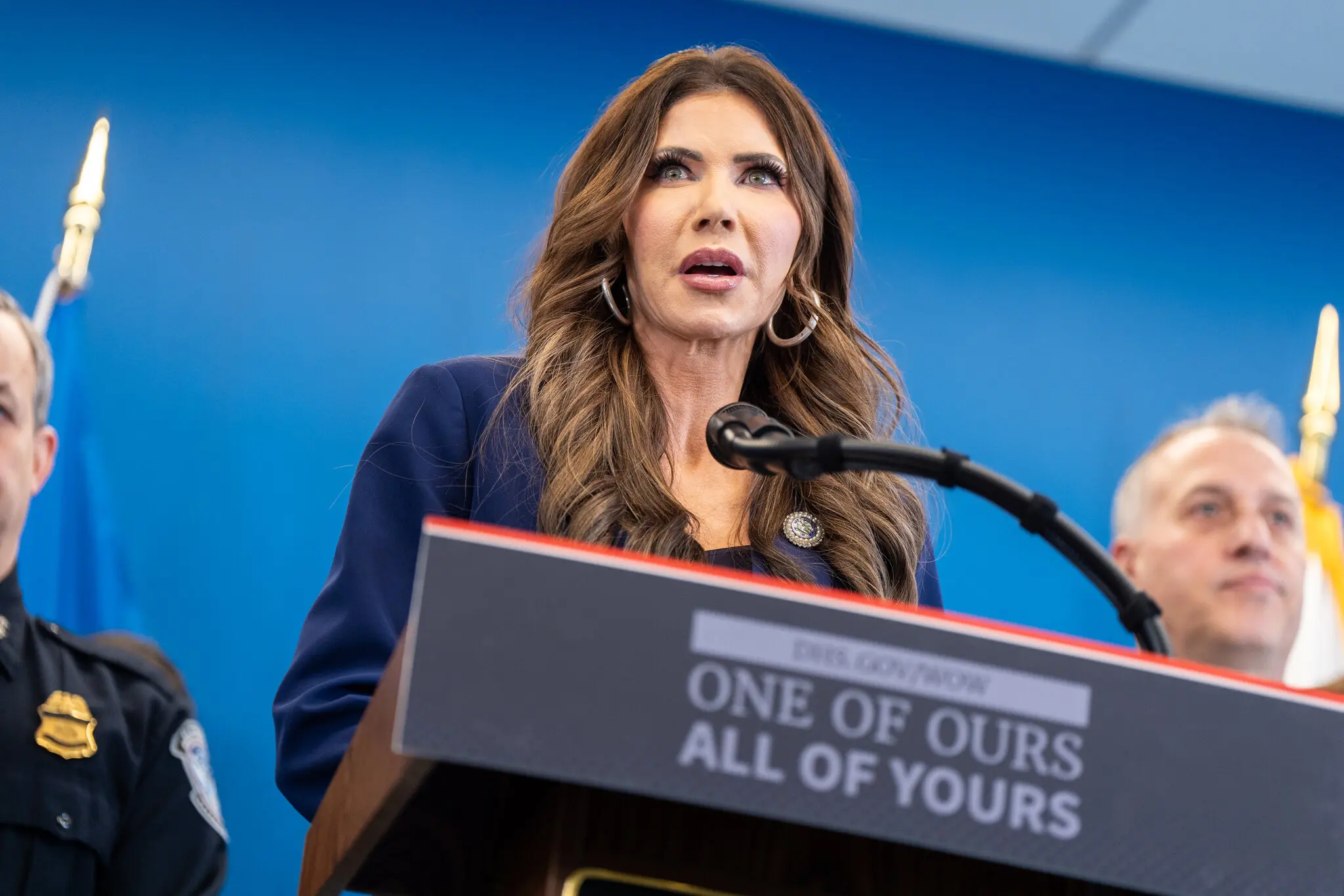
The phrase “one of ours, all of yours” serves as a potent rhetorical device, expertly crafted to navigate the complex interplay between individual identity and a burgeoning collective national movement. Its power lies in its ability to simultaneously affirm a sense of belonging among a specific group, the “ours,” while aspirationaly extending that shared identity to the broader populace, the “all of yours.” This dual appeal is deeply rooted in populist messaging, which thrives on creating an in-group camaraderie and presenting a unified front against perceived external threats or a distant elite. Consequently, the slogan has become instrumental in solidifying support within crucial rural and working-class constituencies, where a sense of shared values and a call to common purpose resonate profoundly. While proponents celebrate this language as a unifying force, opponents sharply criticize it as a subtle, yet insidious, shift toward exclusionary nationalism, arguing that by defining “ours,” it inherently defines those who are “not ours.” Despite this division, its emotional resonance has made the slogan a ubiquitous staple of political rallies, speechifying, and targeted digital marketing campaigns leading into the contentious 2026 election cycle.
Visual Branding and the Political Power of the Cowboy Hat
Kristi Noem’s consistent deployment of the cowboy hat transcends mere sartorial preference, emerging as a meticulously crafted element of her political branding. This choice of attire serves as a potent visual shorthand, instantly invoking notions of “Western grit,” “rugged individualism,” and unwavering “traditional values.” Her presence, whether in high-profile advertisements endorsing firearms or commanding public stages, is almost invariably punctuated by the distinctive silhouette of her hat. This strategic presentation has been instrumental in her evolution from a prominent regional governor to a recognized national symbol within the Republican party, embodying a certain American ethos. The hat, therefore, is not just an accessory; it’s a non-verbal declaration of allegiance to a particular cultural and political identity, resonating deeply with a significant segment of the electorate. Its effectiveness lies in its ability to forge a memorable, telegenic political persona, allowing Noem to distinctly stand out amidst a saturated media landscape, projecting authenticity and a grounded approach that appeals to voters seeking unvarnished leadership. This visual constancy reinforces her narrative as a genuine voice of the heartland, providing a recognizable and reassuring image in an era of political flux. It effectively cuts through the noise, solidifying her as a figure rooted in perceived American bedrock values, a critical asset as she navigates an increasingly complex national political stage and positions herself for broader influence.
Kristi Noem and the Department of Homeland Security Crisis
The Secretary of Homeland Security, Kristi Noem, found her tenure besieged by a torrent of controversies in the projected 2026 political landscape. Her assertive “rugged public persona,” often highlighted by her distinctive cowboy hat, sharply contrasted with the harsh realities unfolding under her departmental watch. One primary flashpoint was “Operation Midway Blitz,” an aggressive federal enforcement initiative launched in several major urban centers. Intended to curb undocumented immigration and perceived internal threats, the operation was widely criticized for its heavy-handed tactics, including warrantless detentions and the indiscriminate profiling of minority communities, leading to widespread accusations of civil rights infringements.
Further escalating the national outcry was a tragic incident in Minneapolis, where a routine ICE enforcement action spiraled into a fatal shooting. The victim, an unarmed bystander, sparked incandescent national protests and galvanized calls for Noem’s immediate removal. Critics argued that the incident was a direct consequence of her department’s increasingly militarized posture. Compounding these crises were damning allegations of “self-dealing.” Investigations revealed that substantial, no-bid contracts for agency recruitment advertisements, worth millions, were awarded to firms with close ties to the Secretary’s political donors and personal associates, fueling suspicions of corruption and the leveraging of public office for private gain. These combined events directly led to House Democrats filing three articles of impeachment against her, challenging the very foundation of her authority and the integrity of her office.
The Strategic Impeachment Movements of the 2026 Cycle
The speculative movement surrounding a “Trump impeachment 2026” has gained considerable traction among House Democrats, serving as a potent narrative deeply intertwined with their broader midterm election strategy. With slogans like “one of ours, all of yours” attempting to unify, this impeachment discourse offers a starkly contrasting vision, galvanizing the Democratic base and framing the political landscape around accountability. The constitutional grounds being debated are expansive, often centering on alleged instances of executive overreach, such as the perceived circumvention of congressional authority and the controversial deployment of federal agents during periods of civil unrest. Critics argue these actions represent a dangerous expansion of presidential power, warranting impeachment proceedings. While the likelihood of successful impeachment in a Republican-controlled House remains exceedingly slim, these efforts are highly symbolic. They function as a powerful rallying cry for Democrats, asserting a unwavering commitment to constitutional checks and balances against perceived abuses. Key figures, such as Representative Robin Kelly, have been instrumental in advocating for these resolutions, consistently highlighting perceived threats to democratic norms and the rule of law. The potential long-term impacts on presidential precedent are profound, risking the transformation of impeachment into a more frequent, politically charged instrument rather than an exceptional constitutional measure reserved for egregious misconduct. This ongoing tension underscores the profound constitutional friction defining the 2026 political landscape.
The Future of the American Political Identity and Brand
The slogan “one of ours, all of yours” encapsulates a potent populist strategy, mirroring the visual lexicon employed by figures like Kristi Noem. Her prominent use of the cowboy hat transcends mere sartorial choice; it acts as a deliberate political signifier, evoking a sense of authenticity, rugged individualism, and a perceived connection to traditional American values. This visual branding, fused with a defiant stance against federal overreach and potential impeachment proceedings, crafts a new leadership paradigm. It presents a leader who is simultaneously approachable – “one of ours” – yet uncompromising in the face of constitutional friction. For the Republican party, this strategy attempts to bridge internal divisions, appealing to a base yearning for strong, culturally resonant leadership while navigating complex legal battles. The durability of the “MAGA” brand in this increasingly theatrical political landscape hinges on its ability to sustain this blend of symbolic representation and overt political challenge, blurring the lines between legislative reality and a powerful, almost mythic, narrative of resistance.
Conclusions
The convergence of traditional symbolism and aggressive legal maneuvering marks a defining moment for the modern Republican party. Whether through the calculated ruggedness of Kristi Noem’s cowboy hat or the procedural warfare of the 2026 impeachment movements, the landscape is shifting toward a more visual and confrontational style of governance. Ultimately, the effectiveness of these strategies will be tested in the upcoming midterms.